

What to Expect With Your First Pair of Hearing Aids

Getting your first pair of hearing aids can be an exciting step toward clearer conversations, greater confidence and a more connected everyday life.
But if you have never worn hearing aids before, you may also have questions.
What will hearing aids sound like at first? How long does it take to adjust? What happens during a hearing aid fitting? How often will your hearing aids need to be adjusted? And how do you know which hearing aids are right for you?
At Summit Hearing Solutions, we help patients throughout Fort Wayne, Bluffton, Columbia City and Northeast Indiana understand what to expect before, during and after receiving their first hearing aids.
Your First Step Is a Hearing Evaluation
Before choosing hearing aids, it is important to understand your hearing.
A professional hearing evaluation can identify the type and degree of hearing loss you may have and help determine which hearing aid options may be appropriate for your needs.
During your hearing appointment, we will also talk about the situations where you are having the most difficulty.
You may notice trouble:
Understanding conversations in restaurants
Hearing family members clearly
Following conversations in groups
Hearing the television at a comfortable volume
Understanding soft-spoken voices
Hearing speech when there is background noise
Following conversations on the phone
Hearing clearly during meetings, church or social activities
Your hearing test provides an important baseline and helps guide recommendations for hearing aid styles, technology and features.
If you have never had your hearing checked, scheduling a hearing evaluation in Fort Wayne or at one of our Northeast Indiana hearing centers is a good place to start.
Choosing the Right Hearing Aids
There is no single hearing aid that is right for everyone.
Today’s hearing aids are available in many styles, sizes and technology levels. The best option depends on your hearing loss, lifestyle, comfort preferences, dexterity, technology needs and the environments where you spend your time.
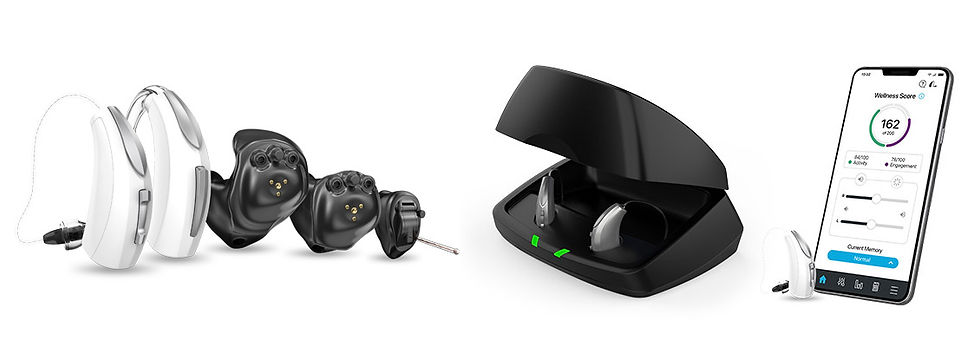
Summit Hearing Solutions offers several common hearing aid styles, including receiver-in-canal, behind-the-ear, in-the-ear, in-the-canal, completely-in-canal and invisible hearing aids. Rechargeable and Bluetooth-enabled options are also available.
Receiver-in-canal hearing aids, often called RIC hearing aids, sit discreetly behind the ear with a thin wire connecting to a small receiver in the ear canal.
They are lightweight, comfortable and popular with many first-time hearing aid users.
Behind-the-Ear Hearing Aids
Behind-the-ear hearing aids can accommodate a wide range of hearing losses and are often easy to handle, clean and maintain.
Custom In-the-Ear Hearing Aids
In-the-ear and in-the-canal hearing aids are custom-made to fit your ear. These styles can be convenient for people who prefer a hearing aid that fits partially or completely inside the ear.
For patients looking for discreet hearing aids, smaller completely-in-canal or invisible-in-canal styles may be an option depending on your hearing loss and ear anatomy.
Rechargeable hearing aids eliminate the need to regularly replace small disposable batteries. Simply place the devices in their charger when you are not wearing them.
Many modern rechargeable hearing aids also include Bluetooth connectivity and advanced sound processing.
Your hearing care provider can help you compare hearing aid styles and determine which options best fit your needs.
What Happens During a Hearing Aid Fitting?
Once your hearing aids are selected, your next important step is the hearing aid fitting.
Your hearing aids are programmed based on your hearing test results and your individual listening needs.
At Summit Hearing Solutions, hearing aid fittings and follow-up care are personalized to the patient rather than treating hearing aids as an off-the-shelf product.
During your hearing aid fitting, you may learn:
How to properly insert and remove your hearing aids
How to charge rechargeable hearing aids
How to replace batteries when needed
How to clean your hearing aids
How to replace wax filters
How to adjust volume or hearing programs
How to connect hearing aids to your smartphone
How to use Bluetooth streaming features
How to store and protect your hearing aids
Understanding how to properly use and maintain your devices can make the transition to better hearing much easier.
Will Hearing Aids Sound Different at First?
Yes, they may.
Hearing loss often develops gradually. Over time, your brain becomes accustomed to receiving less sound.
When you begin wearing hearing aids, everyday sounds that you have not heard clearly for years may suddenly become noticeable again.
You may hear:
Footsteps
Paper rustling
Running water
Birds outside
Turn signals
Dishes clinking
Air conditioning
Your own voice
At first, some of these sounds may seem louder or more noticeable than expected.
That does not necessarily mean something is wrong with your hearing aids.
Your brain may simply need time to become accustomed to processing those sounds again.
How Long Does It Take to Adjust to New Hearing Aids?
Every person adjusts differently.
Some people notice an immediate improvement in conversation, while others need several days or weeks to become comfortable with amplified sound.
Your adjustment period can depend on:
How long you have had hearing loss
The severity of your hearing loss
How consistently you wear your hearing aids
The environments where you use them
Your previous experience with hearing aids
How your hearing aids are programmed
Consistent use is important.
Wearing your hearing aids regularly gives your brain more opportunities to become comfortable with the sounds you are hearing again.
Start in Familiar Listening Environments
When you first begin wearing hearing aids, consider starting in comfortable environments.
Try wearing them:
At home
During one-on-one conversations
While watching television
While talking with family
During a quiet meal
While running errands
As you become more comfortable, begin using your hearing aids in more challenging situations such as restaurants, family gatherings, meetings, worship services or crowded public spaces.
Hearing in Background Noise May Take Time
Difficulty hearing speech in background noise is one of the most common complaints among people with hearing loss.
Restaurants, family gatherings, busy stores and group conversations can all be challenging.
Modern hearing aids use sophisticated sound processing to help emphasize speech and reduce competing noise.
Some newer hearing technology also uses artificial intelligence to analyze the listening environment and help separate speech from unwanted background sound. Summit, for example, offers Aris AI hearing aids designed to support speech understanding in challenging environments.
However, no hearing aid can eliminate every difficult listening situation.
Your brain still plays an important role in determining which sounds to focus on.
With consistent use and proper programming, many people become more comfortable navigating noisy environments.
Your Hearing Aids May Need Adjustments
Your initial hearing aid fitting is the beginning of the process, not the end.
Once you begin wearing your hearing aids in everyday situations, you may notice things you want adjusted.
For example:
Your own voice sounds too loud
Certain sounds seem sharp
Restaurants are still difficult
Some voices sound unclear
Wind noise is distracting
The overall volume feels too strong or too soft
These observations are useful.
Your hearing care provider can use your feedback to fine-tune the programming of your hearing aids.
At Summit Hearing Solutions, ongoing adjustments and follow-up support are part of the hearing care process.
Keep Track of Difficult Listening Situations
During your first few weeks, consider keeping notes about situations where you still have difficulty hearing.
Instead of simply writing:
“I couldn't hear well.”
Try something more specific:
“I had trouble understanding my wife at dinner when the television was playing.”
Or:
“I could hear people talking at the restaurant, but the words were not clear.”
Specific examples can help your hearing care provider understand how your hearing aids are performing in real-world situations.
Hearing Aids Need Regular Cleaning and Maintenance
Hearing aids are small electronic devices that are worn in or around your ears every day.
Earwax, moisture and debris can interfere with performance if the devices are not cleaned properly.
Basic hearing aid maintenance may include:
Wiping your hearing aids daily
Cleaning microphone openings
Replacing wax filters
Keeping your hearing aids dry
Charging rechargeable hearing aids regularly
Replacing disposable batteries when needed
Scheduling professional hearing aid cleanings
Summit Hearing Solutions also provides hearing aid cleaning, troubleshooting and repair services for many hearing aid styles and brands.
Your Hearing Aids Should Feel Comfortable
Your hearing aids should fit securely and comfortably.
During the first few days, you may notice the devices simply because they are new.
However, your hearing aids should not cause persistent discomfort, pressure or irritation.
If something does not feel right, let your hearing care provider know.
Small physical adjustments can often make a significant difference.
Your Hearing Can Change Over Time
Hearing can gradually change.
That is why periodic hearing evaluations remain important even after you begin wearing hearing aids.
If your hearing changes, your hearing aids may be reprogrammed to better match your current hearing needs.
Regular hearing checks also provide an opportunity to review your hearing aid performance and determine whether your current technology continues to meet your needs.
Your First Hearing Aids Are the Beginning of Better Hearing Care
Getting hearing aids is about more than purchasing a device.
Successful hearing care involves professional testing, selecting the right technology, accurate fitting and programming, follow-up adjustments, maintenance and ongoing support.
The goal is not simply to make sounds louder.
The goal is to help you understand conversations more clearly and stay connected to the people and activities that matter to you.
Looking for Hearing Aids in Fort Wayne or Northeast Indiana?
If you are considering your first pair of hearing aids, Summit Hearing Solutions can help you understand your hearing and explore your options.
Summit provides hearing evaluations, hearing aid consultations, hearing aid fittings, adjustments, cleanings, repairs and ongoing hearing care at four Northeast Indiana locations:
Fort Wayne — West Jefferson Boulevard
North Fort Wayne — West Dupont Road
Bluffton
Columbia City
Whether you are looking for rechargeable hearing aids, Bluetooth hearing aids, discreet hearing aids or today’s newest hearing technology, we can help you compare your options and find a solution that fits your hearing needs and lifestyle.
Schedule a hearing evaluation with Summit Hearing Solutions and take the first step toward hearing more clearly.